



Blog
Nasal peptide spray: how peptide administration through the nose is studied
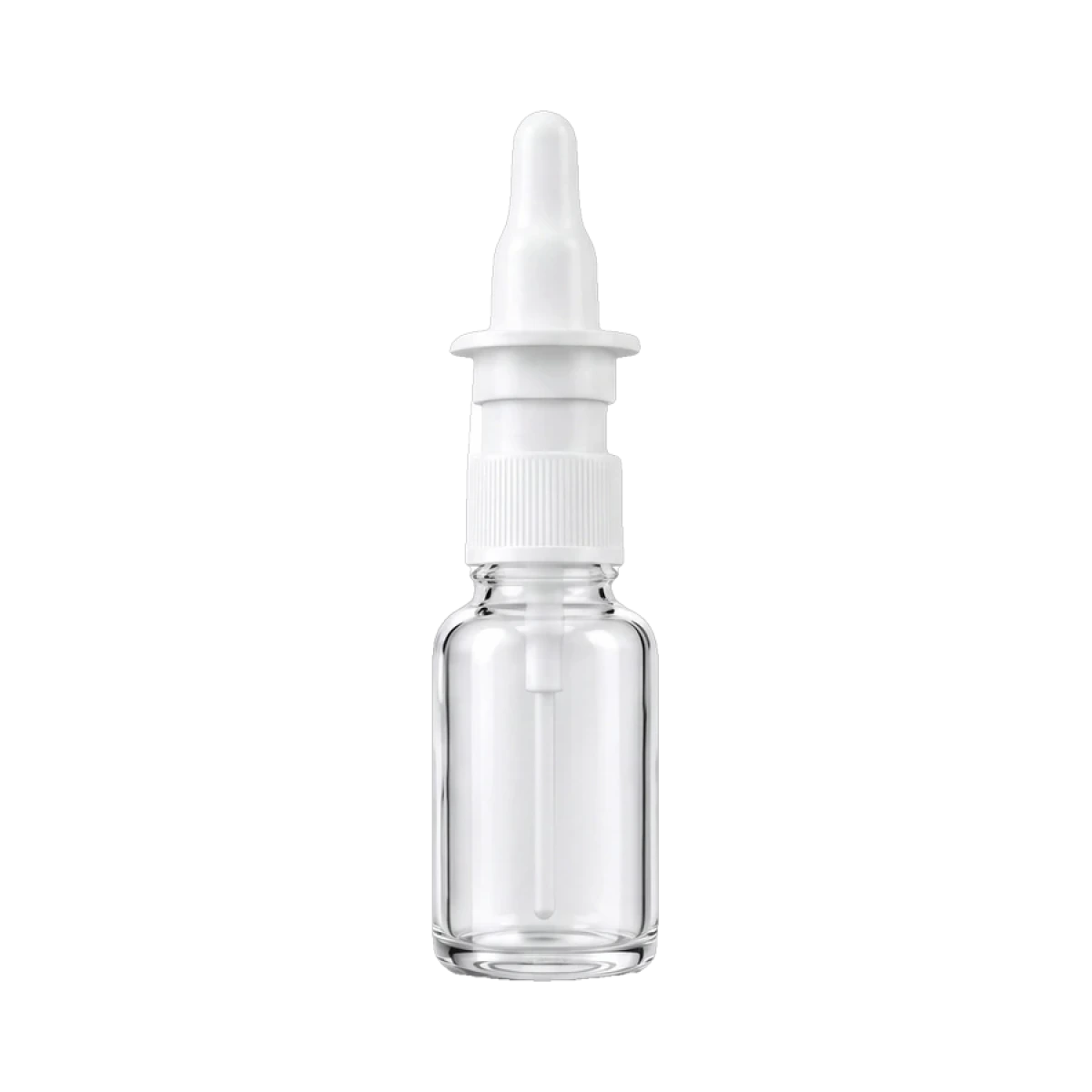
A nasal spray is known as a way of administering preparations for the nose, but in pharmaceutical research it has a wider role as well. The nasal mucosa is richly supplied with blood, easily accessible and located in the immediate vicinity of the pathways connecting the nasal cavity with the central nervous system. For that reason nasal administration has been studied for years as a possible route for peptides and other molecules that are poorly absorbed through the digestive tract.
That, however, does not mean that every peptide liquid put into a spray bottle automatically becomes a reliable nasal product. With peptides, formulation, stability and dose control are the central part of the problem.
Why is classic oral administration of peptides demanding?
Peptides are chains of amino acids, so the digestive system often recognises them as material to be broken down. The acidic environment of the stomach and proteolytic enzymes can break them down before they reach the bloodstream. In addition, many peptides are relatively large, hydrophilic molecules that pass through cell membranes with difficulty.
Injection bypasses those obstacles but is invasive. That is why alternative routes are studied: pulmonary, transdermal, buccal, sublingual and nasal.
What happens on the nasal mucosa?
The nasal cavity is lined with a mucosa containing a large number of blood vessels. A molecule that remains stable in the formulation and crosses the epithelium can reach the systemic circulation. In the upper parts of the nose there are also olfactory pathways, while the trigeminal nerve provides an additional anatomical link between the nasal region and the central nervous system.
On that basis the concept of “nose-to-brain” delivery was developed. Research shows that certain substances can, under suitable conditions, use the olfactory and trigeminal pathways. Efficiency is nonetheless often low and variable, and a large part of the administered amount can end up in the pharynx and be swallowed.
The main advantages of the nasal route
- avoiding passage through the stomach and intestines;
- avoiding first-pass metabolism in the liver for part of the absorbed substance;
- rapid contact with a well-vascularised mucosa;
- the possibility of non-invasive administration;
- research potential for access to the central nervous system.
These advantages describe the potential of the route of administration, not a guaranteed effect of a particular peptide.
Why is actual delivery more complex than it looks?
Mucociliary clearance
The nose constantly removes particles and secretions. The cilia of the epithelium move mucus towards the pharynx, which shortens the contact time of the formulation with the mucosa. If contact is short, absorption can be limited too.
Enzymatic degradation
The nasal mucosa is not a passive membrane. It contains enzymes that can alter or break down peptides. Stability in the bottle is therefore not the only stability that matters: what happens after contact with the tissue matters too.
Volume and spray placement
The nasal cavity accepts a small amount of liquid. Too large a volume increases runoff and swallowing, while the shape of the spray, droplet size and the anatomy of the nose affect where it is deposited. A blocked nose, inflammation of the mucosa and individual anatomical differences further change the result.
pH, osmolality and excipients
A peptide can be chemically unstable outside a certain pH range. On the other hand, the formulation has to be acceptable for the nasal mucosa. Buffers, preservatives and permeation enhancers can affect both stability and tolerability.
Sprayer accuracy
For reproducibility it matters how much liquid the device delivers with one press and whether that amount changes with use. Laboratory data obtained with a precision device cannot be transferred automatically to every commercial sprayer.
Examples from research on Semax and Orexin-A
Semax has been studied intranasally in several experimental papers, including research on changes in neurotrophic factors. Orexin-A has been examined in people with narcolepsy, where small controlled studies recorded changes in REM sleep and in certain attention tasks. Nasal administration of Orexin-A has also been studied in animal models of sleep deprivation.
It is important that these are particular substances, particular formulations and controlled protocols. They are not evidence that the nasal route is equally effective for all peptides.
Why does a peptide set consist of several parts?
In some research peptide sets the active component, the appropriate solvent and the spray device are kept separate. The reason is that peptides in dry form can have a different stability profile than in solution, while the delivery device has a function of its own.
The SORA Focus peptide complex is presented as a set with a vial containing the combination of Semax, Pinealon, Orexin-A and Selank, a bottle of bacteriostatic water and an empty bottle with a nasal sprayer. This description explains the contents of the set, but it is not an instruction for preparation, dosing or independent medical use.
Conclusion
Nasal administration is a serious field of pharmaceutical research, particularly for molecules that are difficult to administer by the classic oral route. The potential comes from the well-vascularised mucosa and the anatomical connection of the nose with the nervous system. The limitations are equally important: short residence time, enzymatic degradation, the small available volume, device variability and the need for a precise formulation.
That is why the phrase “nasal peptide spray” describes a format of administration but does not in itself confirm the bioavailability, efficacy or safety of a particular product.